
New Housing Boosts Conservation in Australia
Property, Housing Supply, Conservation, Australia
Innovative Land Deal Links New Housing to Local Conservation Funding
An Australian property developer has struck a landmark agreement that ties every hectare of new residential land it acquires to direct funding for a nearby conservation reserve, offering buyers and investors a two-for-one outcome: more housing supply and measurable protection of local ecosystems.
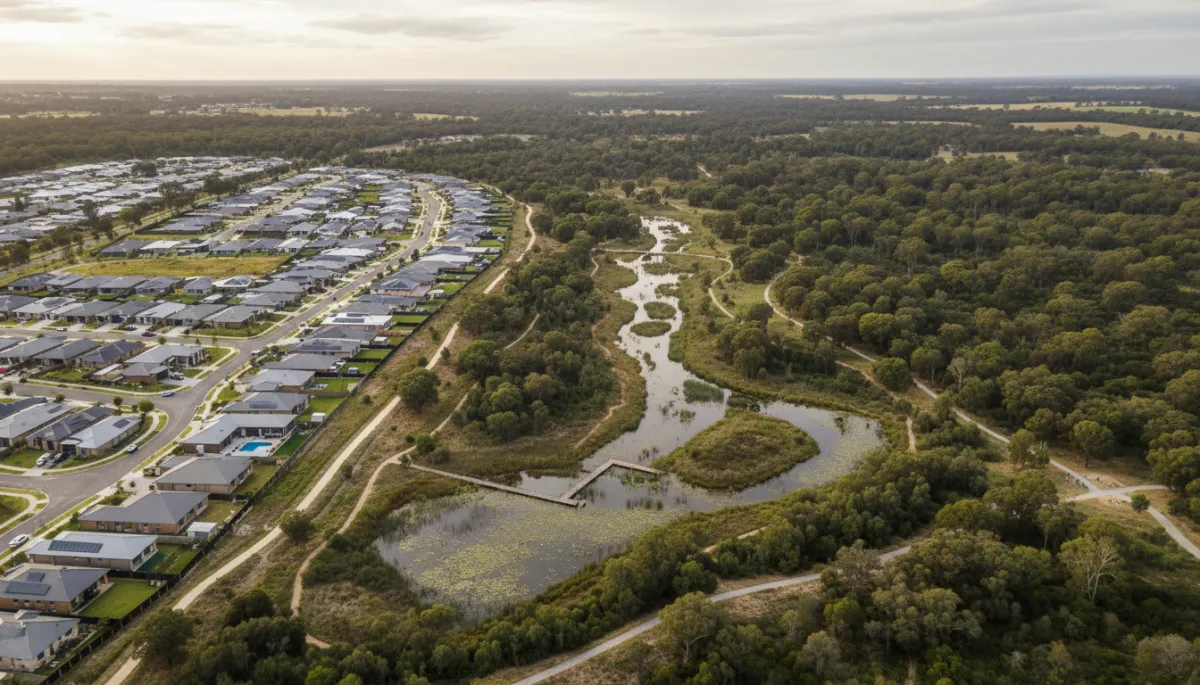
How the two-for-one model works
Under the arrangement, the developer commits a fixed contribution from each lot sale in a new masterplanned community to a ring‑fenced conservation fund. That fund is used to purchase, manage, and restore a nearby conservation area identified for its biodiversity value, aligning with national goals to protect 30 per cent of Australia’s land by 2030 under programs such as the Australian Bushland Program (dcceew.gov.au).
Rather than offsetting impacts in distant locations, the model keeps benefits local. Buyers moving into the estate can see, and potentially access, the protected bushland or wetland their purchase has helped secure. For investors, the structure is embedded in the development approvals and long‑term management plans, providing clearer governance than ad‑hoc corporate social responsibility projects.
Boosting housing supply in high‑growth corridors
Australia’s housing shortage remains acute, with federal and state governments pushing for accelerated approvals and higher dwelling targets. The Commonwealth has already fast‑tracked more than 80,000 new homes through streamlined environmental approvals under the Environment Protection and Biodiversity Conservation Act (minister.dcceew.gov.au), highlighting the policy priority on supply.
For buyers and investors, the new deal adds to this momentum by unlocking additional serviced land in key growth corridors, similar to large‑scale masterplanned projects such as Frasers Property’s SkyRidge acquisition in Queensland, which added thousands of lots to the pipeline (frasersproperty.com.au). By tying conservation funding directly to land acquisition, the developer can demonstrate that increased density and lot yield are being delivered in tandem with local environmental gains, rather than at their expense.
Tangible benefits for local ecosystems and biodiversity
Australia’s conservation sector has recently recorded major wins, such as Bush Heritage Australia’s acquisition of the 107,000‑hectare Wanarra property to help form a one‑million‑hectare conservation corridor in Western Australia’s Mid West (newshub.medianet.com.au). However, many smaller patches of habitat near cities and regional centres remain vulnerable to piecemeal clearing and fragmentation as urban areas expand.
By dedicating a portion of development proceeds to protect and actively manage a nearby reserve, the two‑for‑one model aims to safeguard these critical local ecosystems. Funds can be directed towards weed and feral animal control, fire management, ecological monitoring, and the restoration of native vegetation. In some cases, the reserve may support threatened species reintroduction programs similar to those underway in New South Wales with partners such as Australian Wildlife Conservancy and the Wild Deserts initiative (nsw.gov.au).
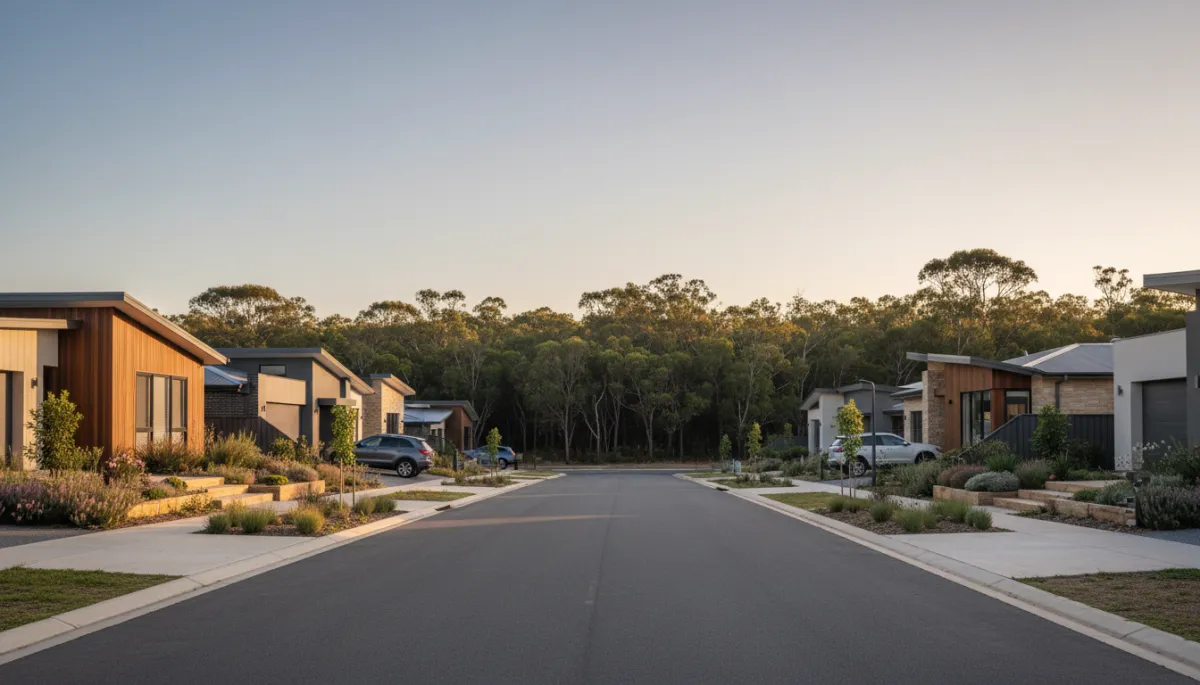
Well‑planned estates beside protected reserves can enhance amenity while securing local biodiversity.
Why this matters for buyers and investors
For owner‑occupiers, proximity to high‑quality green space is more than an aesthetic benefit. Access to parks, walking trails, and natural corridors is increasingly associated with higher wellbeing, stronger community identity, and, in many markets, price resilience. A development that permanently protects its green backdrop, rather than leaving it vulnerable to future subdivision, can be more attractive over the long term.
Investors are also paying closer attention to environmental, social and governance (ESG) credentials. Institutional capital has been active across Australian real estate—from logistics facilities in Sydney and Brisbane to major retail recapitalisations—often with sustainability considerations embedded in due diligence. A residential project that can demonstrate verifiable conservation outcomes, audited over time, may appeal to funds and syndicates seeking assets aligned with ESG mandates and community expectations.
Navigating approvals and community expectations
Recent controversies—from tourism projects at Smiths Beach in Western Australia to housing proposals near Brunswick Heads in New South Wales—illustrate how quickly community opposition can escalate when residents feel nature is being sacrificed for short‑term gain (abc.net.au). Legal challenges, appeals, and reputational risks can add years and significant cost to development timelines.
A model that visibly links every new home to local conservation funding may help developers secure social licence earlier in the planning process. Transparent reporting on how much land has been protected, what management actions are underway, and which species are benefiting can provide reassurance to councils, regulators, and neighbouring communities that growth is being managed responsibly.
What to watch if you are considering buying or investing
For Australian property buyers and investors assessing projects that promote this two‑for‑one approach, several practical questions are worth asking:
- Is the conservation area legally protected through covenants, easements, or public ownership?
- How is the conservation fund structured, and who oversees its spending and reporting?
- Are there clear management plans, including fire, pest control, and community access arrangements?
- Do the commitments align with broader government programs and planning strategies in the region?
When structured carefully, this emerging model has the potential to ease the tension between housing supply and environmental preservation. For purchasers, it offers the promise of living in well‑connected communities with enduring natural assets on their doorstep. For investors, it provides a pathway to participate in Australia’s growth story while supporting the protection of the very landscapes that make these locations desirable in the first place.
